

Why Garage and Shop Floors Need Protective Coatings
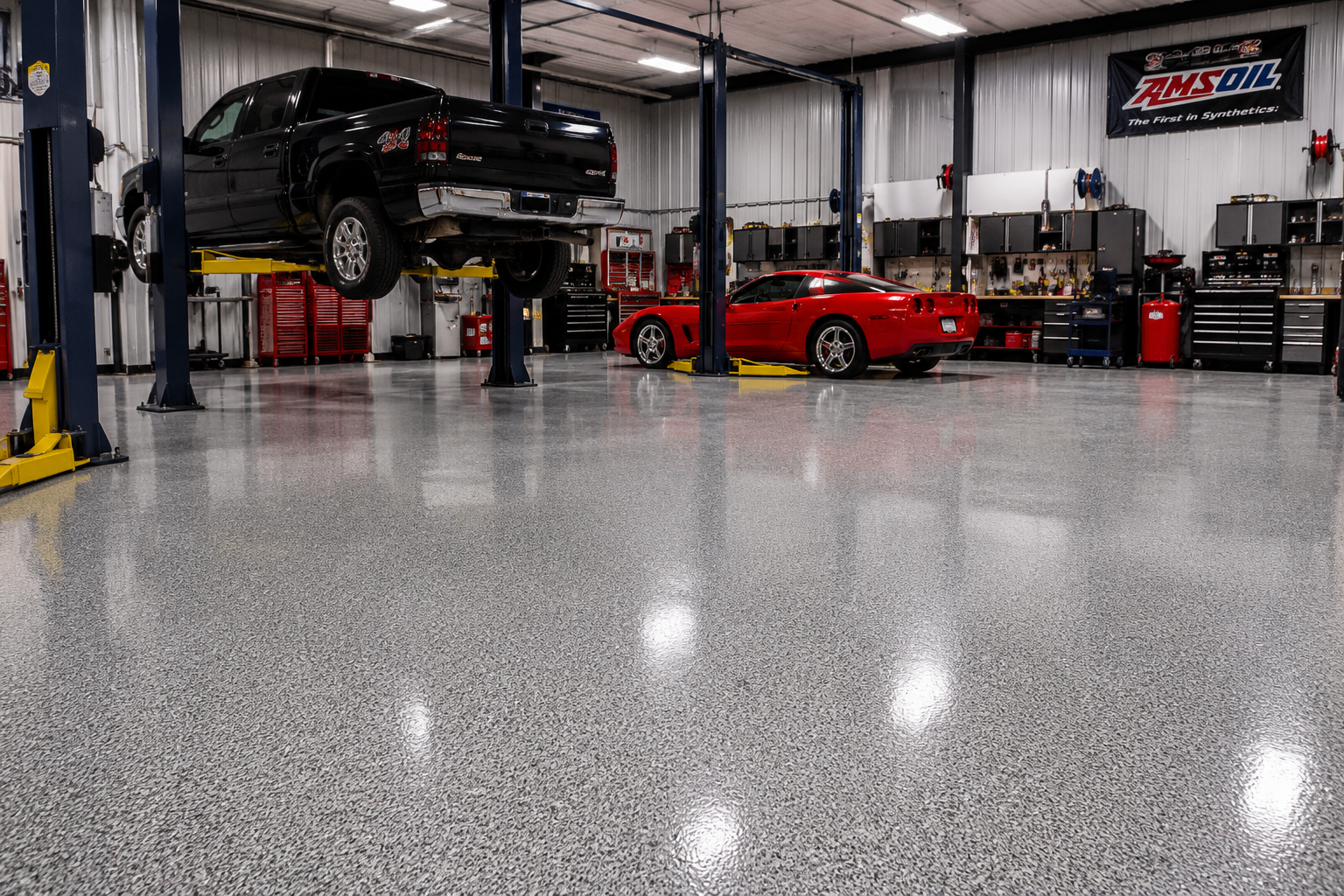
Garage and shop floors endure some of the harshest conditions of any concrete surface. From vehicle traffic and heavy equipment to oil spills, chemicals, dropped tools, and constant abrasion, these environments place enormous stress on concrete every single day. While bare concrete may appear durable at first glance, unprotected concrete floors often begin deteriorating much faster than many property owners expect.
Over time, garage and shop floors can develop stains, cracks, dusting, surface erosion, moisture problems, and general wear that negatively affects both appearance and functionality. Protective concrete coatings help solve many of these problems by creating a durable barrier that shields the concrete from damage while improving safety, maintenance, and overall performance.
Whether in commercial garages, automotive shops, industrial service bays, warehouses, or residential workshops, protective coatings are one of the best long-term investments property owners can make for their concrete floors.
Bare Concrete Is More Vulnerable Than It Looks
Concrete is strong, but it is not indestructible.
One of the biggest misconceptions about garage and shop floors is that bare concrete can withstand unlimited abuse without protection. In reality, concrete is naturally porous and highly vulnerable to many of the conditions commonly found in garages and workspaces.
Without a protective coating, concrete absorbs:
Oil
Grease
Chemicals
Moisture
Salt
Dirt and debris
Over time, these contaminants penetrate the surface and begin breaking down the concrete itself.
Bare concrete is also highly susceptible to:
Surface wear
Cracking
Staining
Dusting
Moisture intrusion
Tire marks
Abrasion damage
Protective coatings help prevent these issues before they become major problems.
Oil and Chemical Spills Can Permanently Damage Concrete
Garages and shops are constantly exposed to automotive fluids and industrial chemicals.
Oil, brake fluid, gasoline, solvents, cleaning products, and other substances can soak directly into unsealed concrete. Once absorbed, these materials are extremely difficult — and sometimes impossible — to fully remove.
Beyond appearance issues, chemical exposure can weaken concrete over time and contribute to long-term surface deterioration.
Protective flooring systems such as epoxy and polyurea coatings create a sealed surface that helps resist:
Chemical absorption
Oil staining
Fluid penetration
Surface contamination
This makes cleanup significantly easier while helping preserve the integrity of the floor.
Heavy Equipment and Traffic Wear Down Concrete
Garage and shop floors experience constant physical stress from:
Vehicles
Forklifts
Tool carts
Machinery
Rolling equipment
Dropped tools
Tire traffic
Everyday use slowly wears away unprotected concrete surfaces. Dirt and grit tracked across the floor act like sandpaper, gradually eroding the top layer of the concrete.
Over time, this can lead to:
Surface pitting
Scratches
Spalling
Cracking
Uneven wear patterns
Protective coatings provide an additional layer of durability designed specifically to withstand heavy use environments.
Moisture Causes Long-Term Damage
Moisture is another major threat to garage and shop floors, especially in climates like the Pacific Northwest.
Concrete naturally absorbs moisture from the surrounding environment. Water, snow, rain, and humidity can slowly penetrate unsealed concrete and create ongoing problems such as:
Cracking
Freeze-thaw damage
Surface deterioration
Coating failure
Mold or mildew concerns
Efflorescence (white mineral deposits)
Garages and shops are particularly vulnerable because vehicles often bring in water, mud, and road salts during wet weather conditions.
Protective coatings help seal the surface and reduce moisture intrusion that can accelerate concrete deterioration.
Concrete Dusting Creates Ongoing Maintenance Problems
Many garages and industrial shops eventually develop a problem known as concrete dusting.
Dusting occurs when the concrete surface begins breaking down and releasing fine powdery particles. This dust accumulates on:
Vehicles
Equipment
Shelving
Inventory
Work surfaces
Dusting not only creates cleaning frustrations but also signals that the concrete surface is deteriorating.
Protective coatings and densification systems help eliminate dusting by strengthening and sealing the concrete surface.
Safety Matters in Work Environments
Garage and shop floors also need to support workplace safety.
Oil spills, moisture, and worn concrete surfaces can create slippery and hazardous conditions. Cracked or damaged floors may also contribute to trip hazards and equipment instability.
Many professional coating systems can include:
Slip-resistant textures
Anti-slip additives
Improved traction
Easier visibility of spills and hazards
These features help create safer working environments for employees, customers, and equipment operators.
Protective Coatings Improve Appearance
Appearance may not always be the first concern in industrial environments, but clean and professional-looking floors still matter.
Stained, cracked, dusty, or deteriorating concrete can make an entire facility feel older and poorly maintained. In automotive shops, commercial garages, and industrial spaces, floor appearance often contributes to customer perception and overall professionalism.
Protective coatings provide a cleaner, more polished appearance while also helping facilities maintain a more organized and professional environment.
Modern coating systems are available in a wide variety of:
Colors
Finishes
Flake systems
Decorative options
Industrial textures
This allows businesses to balance durability with appearance.
Protective Coatings Extend Floor Lifespan
One of the biggest advantages of professional floor coatings is long-term protection.
Coating systems help:
Reduce wear
Prevent chemical damage
Minimize moisture intrusion
Improve durability
Simplify maintenance
Extend concrete lifespan
By protecting the underlying concrete from damage, coatings help property owners avoid expensive repair and replacement costs in the future.
Choosing the Right Coating System Matters
Not all coating systems are the same. Different garages and shops have different performance needs depending on:
Traffic levels
Chemical exposure
Moisture conditions
Temperature fluctuations
Type of equipment used
Professional evaluation helps determine which system is best suited for the environment.
Options may include:
Epoxy flooring systems
Polyurea coatings
Flake systems
Urethane cement coatings
Grind and seal systems
Each offers unique advantages depending on the application.
Protecting Concrete for the Long Term
Garage and shop floors face some of the toughest conditions any concrete surface will experience. Without protection, even durable concrete will eventually begin deteriorating under constant exposure to traffic, chemicals, moisture, and abrasion.
At Concrete Protective Solutions, professional concrete coating systems help property owners protect garage and shop floors while improving durability, appearance, safety, and long-term performance.
With the right protective system in place, garage and shop floors can remain cleaner, stronger, and more resistant to damage for many years to come.
