

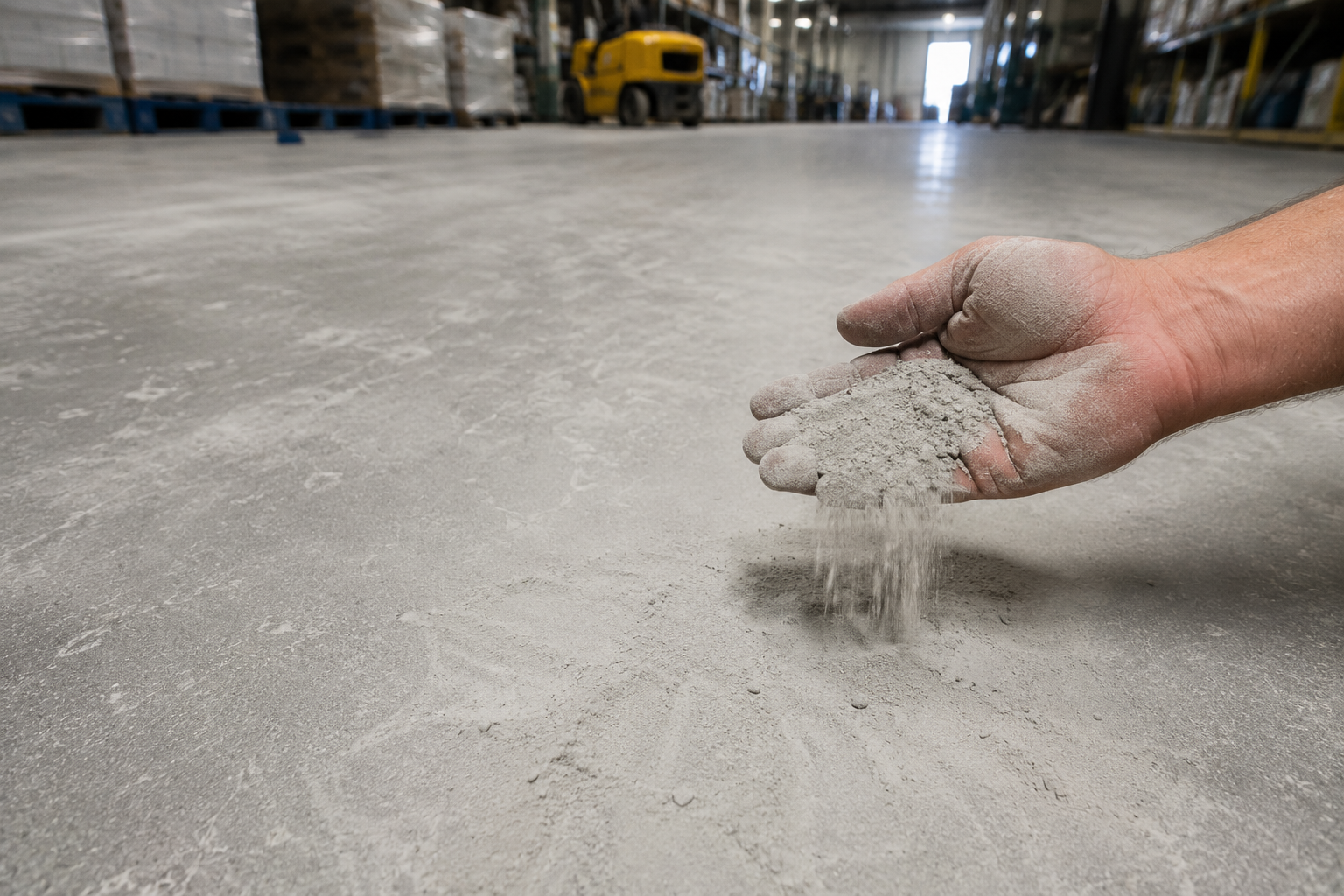
Concrete floors are known for being durable, long-lasting, and capable of handling heavy use in commercial and industrial environments. However, many property owners eventually encounter a frustrating issue known as concrete dusting. This problem often appears gradually at first — a fine layer of dust collecting on surfaces, equipment, shelves, or vehicles — but over time it can become a major maintenance and cleanliness issue.
Concrete dusting not only affects the appearance of a facility, but it can also signal that the concrete surface is deteriorating. Left untreated, dusting can lead to accelerated wear, ongoing maintenance problems, reduced indoor air quality, and even premature floor failure.
Understanding why concrete dusting happens and how professional treatment can stop it is essential for protecting commercial and industrial concrete floors long term.
What Is Concrete Dusting?
Concrete dusting occurs when the surface of a concrete floor begins breaking down and releasing fine powdery particles. These particles are usually light gray or white and can accumulate quickly throughout a facility.
Dusting often becomes noticeable when:
Footprints appear in fine dust
Equipment and shelves constantly collect residue
Floors seem dirty shortly after cleaning
Dust accumulates around forklifts or machinery
Sweeping creates excessive airborne particles
In many facilities, dusting becomes a constant cleaning problem that never seems to fully go away.
Why Concrete Dusting Happens
Concrete dusting typically develops when the top surface of the concrete becomes weak or begins deteriorating. Several factors can contribute to this problem.
Improper Concrete Finishing
One of the most common causes of dusting begins during the original installation of the concrete.
If too much water is added during finishing or if the surface is overworked while curing, the top layer of concrete can become weak and porous. This creates a fragile surface that gradually breaks apart under traffic and abrasion.
Poor curing conditions can also prevent the concrete from developing proper surface strength.
Moisture Problems
Moisture is another major contributor to concrete dusting.
Concrete naturally absorbs and releases moisture over time. In areas with high humidity or moisture exposure — such as the Pacific Northwest — ongoing moisture movement can weaken unprotected concrete surfaces.
Water intrusion may:
Break down surface materials
Weaken sealers
Increase porosity
Accelerate surface deterioration
Without proper protection, moisture-related dusting can worsen steadily over time.
Heavy Traffic and Abrasion
Commercial and industrial floors experience constant wear from:
Foot traffic
Forklifts
Pallet jacks
Rolling equipment
Heavy machinery
Dirt and grit
Over time, abrasive particles grind against the concrete surface like sandpaper. As the top layer wears away, fine concrete particles begin breaking loose and creating dust.
Warehouses, manufacturing facilities, garages, and distribution centers are especially vulnerable because of their heavy daily traffic.
Lack of Surface Protection
Bare concrete is much more vulnerable to deterioration than protected concrete.
Without sealers or protective coatings, the surface remains exposed to:
Abrasion
Chemical exposure
Moisture
Staining
Surface erosion
Over time, unprotected concrete gradually weakens and begins producing dust.
Protective flooring systems help prevent this breakdown by sealing and strengthening the surface.
Why Concrete Dusting Is a Bigger Problem Than Many Realize
Some property owners assume concrete dusting is simply a cosmetic issue. In reality, it can create several serious long-term problems.
Increased Cleaning Costs
Dusting creates constant maintenance challenges. Facilities often need more frequent sweeping, vacuuming, and dust removal just to maintain a basic level of cleanliness.
Dust can spread throughout the building and settle on:
Equipment
Products
Inventory
Vehicles
Shelving
Office areas
This leads to higher labor costs and ongoing frustration for maintenance teams.
Reduced Indoor Air Quality
Airborne concrete dust can negatively affect indoor air quality, especially in enclosed industrial or warehouse environments.
Excess dust may irritate:
Eyes
Skin
Respiratory systems
Facilities with constant dust problems may also struggle to maintain clean working conditions for employees and customers.
Surface Deterioration Gets Worse Over Time
Dusting is often an early sign that the concrete surface is deteriorating.
Without treatment, floors may eventually develop:
Surface pitting
Scaling
Cracking
Spalling
Coating failure
Increased moisture penetration
Addressing the issue early helps prevent much larger and more expensive repairs later.
How to Stop Concrete Dusting
The good news is that concrete dusting can often be significantly reduced or eliminated through professional treatment.
Professional Surface Preparation
The first step is identifying the severity and cause of the dusting problem. Professional surface preparation may involve:
Grinding weak surface layers
Cleaning contaminants
Repairing damaged areas
Preparing the surface for protection
Proper preparation is critical for long-term performance.
Concrete Densifiers
Concrete densifiers are commonly used to strengthen soft or dusty concrete surfaces.
These treatments penetrate into the concrete and chemically react with the material to create a denser, harder surface that is more resistant to wear and dusting.
Densifiers are often used in:
Warehouses
Industrial facilities
Polished concrete systems
Manufacturing spaces
Protective Coatings and Sealers
Protective flooring systems help prevent future dusting by sealing and protecting the concrete surface.
Depending on the environment, solutions may include:
Epoxy coatings
Polyurea systems
Grind and seal finishes
Polished concrete
Urethane cement systems
These systems help resist abrasion, moisture, and chemical exposure while improving durability and appearance.
Preventative Maintenance Matters
Routine maintenance is one of the best ways to prevent dusting from returning.
Regular cleaning, inspections, and protective maintenance help extend the lifespan of concrete floors while reducing long-term repair costs.
At Concrete Protective Solutions, professional concrete flooring systems are designed to help commercial and industrial property owners protect their concrete surfaces from dusting, wear, and premature deterioration.
With proper preparation, protection, and maintenance, concrete floors can remain cleaner, stronger, and more durable for many years to come.
