

Polished Concrete vs. Traditional Flooring: Which Is Better for Commercial Buildings?
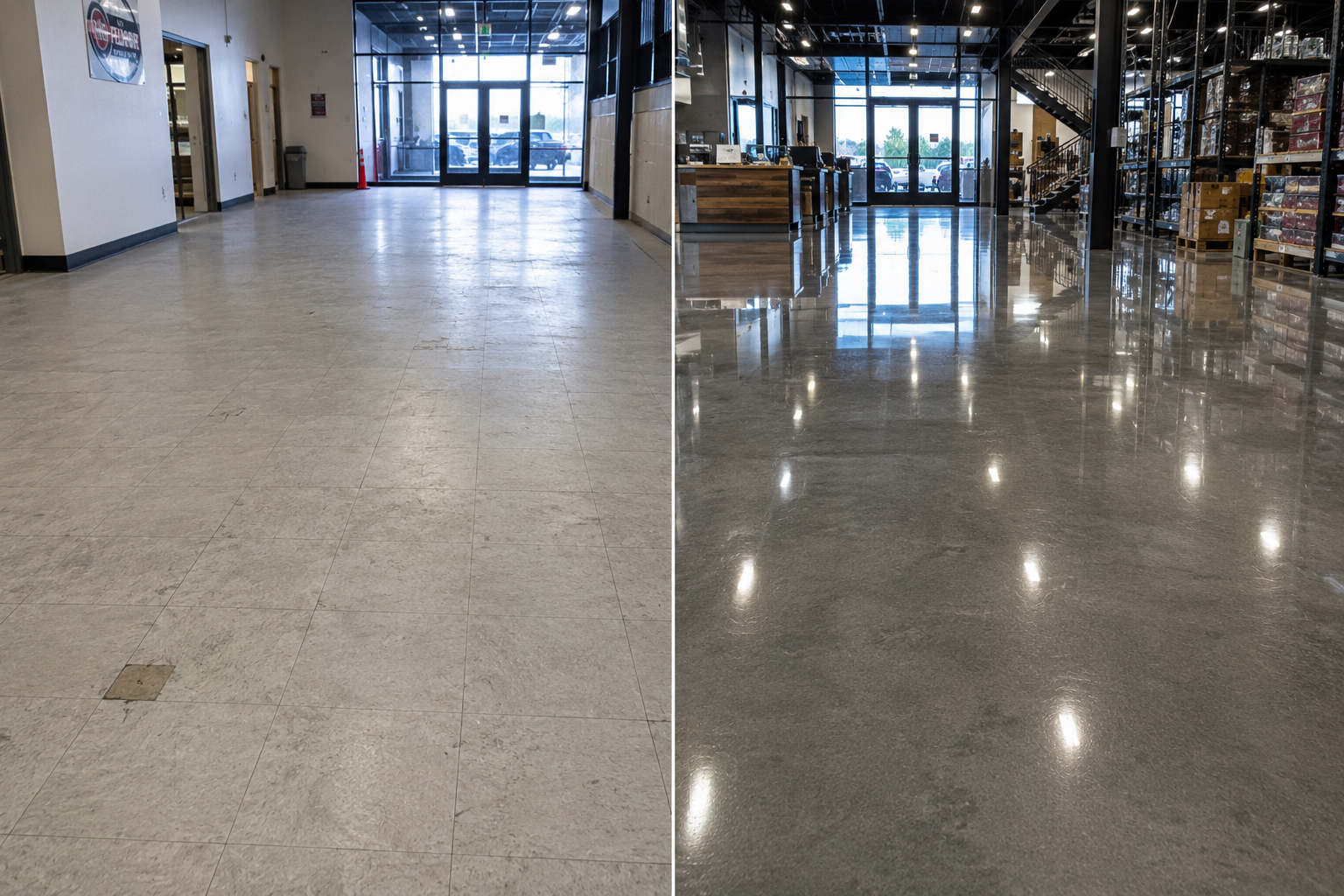
Choosing the right flooring for a commercial building is a major decision. Floors affect not only the appearance of a facility, but also long-term maintenance costs, durability, safety, and overall functionality. Business owners and property managers often compare options such as tile, vinyl, carpet, epoxy systems, and polished concrete when planning a new construction project or renovating an existing space.
In recent years, polished concrete has become one of the most popular commercial flooring solutions across warehouses, retail stores, office buildings, schools, healthcare facilities, and industrial environments. But how does polished concrete compare to more traditional flooring options?
The answer depends on the goals of the facility, traffic levels, maintenance expectations, and budget. Understanding the advantages and limitations of each option can help property owners make a more informed long-term investment.
What Is Polished Concrete?
Polished concrete is a mechanically refined concrete surface created by grinding and polishing the existing slab using industrial diamond tooling. The process gradually smooths and densifies the concrete surface, creating a durable and visually appealing finish.
Unlike coatings that sit on top of the concrete, polished concrete becomes part of the concrete itself. This creates a long-lasting flooring system that is highly resistant to wear and capable of handling heavy commercial traffic.
Polished concrete can range from matte finishes to high-gloss reflective surfaces depending on the desired appearance and level of refinement.
Traditional Commercial Flooring Options
Traditional commercial flooring may include:
Carpet tile
Vinyl composition tile (VCT)
Luxury vinyl tile (LVT)
Ceramic tile
Hardwood
Laminate
Epoxy coatings
Sheet vinyl
Each flooring material has advantages depending on the environment, but many traditional options require more frequent replacement or maintenance over time.
Durability: Polished Concrete Often Lasts Longer
One of the biggest advantages of polished concrete is durability.
Commercial buildings experience constant wear from:
Foot traffic
Rolling equipment
Furniture movement
Dirt and debris
Moisture
Heavy loads
Traditional flooring materials can become scratched, torn, stained, chipped, or worn relatively quickly under heavy use. Carpet may flatten and stain, vinyl can peel or crack, and tile grout can discolor or fail over time.
Polished concrete, however, is designed specifically for long-term durability. Properly polished and maintained concrete floors can last for decades while resisting:
Abrasion
Heavy traffic
Surface wear
Tire marks
Impact damage
This makes polished concrete especially popular in:
Warehouses
Retail stores
Schools
Manufacturing facilities
Distribution centers
Office buildings
Maintenance Costs Are Often Lower
Maintenance is another major factor when comparing flooring systems.
Traditional flooring often requires:
Waxing
Stripping
Deep cleaning
Carpet extraction
Tile grout cleaning
Frequent repairs
Replacement of damaged sections
These maintenance costs add up significantly over time.
Polished concrete is much easier to maintain. Routine maintenance typically involves:
Dust mopping
Damp mopping
Occasional burnishing
Periodic maintenance polishing
Because polished concrete does not rely on waxes or coatings in the same way VCT or other flooring systems do, there is less long-term upkeep required.
For many commercial property owners, lower maintenance costs are one of the biggest reasons they choose polished concrete.
Polished Concrete Improves Light Reflection
Highly polished concrete floors are extremely reflective, which can brighten interior spaces and improve lighting efficiency.
In large commercial environments, this increased reflectivity may help reduce lighting demands and improve visibility throughout the building.
Retail stores, office spaces, and showrooms often benefit from the clean, modern appearance polished concrete creates.
Traditional flooring materials generally do not provide the same level of natural light reflectivity.
Moisture Resistance Matters
Moisture is a major concern for many commercial buildings, especially in the Pacific Northwest.
Some traditional flooring systems are vulnerable to:
Water damage
Mold growth
Adhesive failure
Curling edges
Warping
Delamination
Because polished concrete works directly with the existing slab, it is often less susceptible to these types of moisture-related problems compared to flooring systems installed over the concrete.
However, proper moisture evaluation and slab preparation are still critical before beginning any flooring project.
Traditional Flooring May Offer More Design Variety
While polished concrete offers a sleek and modern appearance, some businesses prefer the softer or more decorative feel of traditional flooring materials.
Carpet, vinyl, tile, and hardwood offer:
More color options
Decorative patterns
Softer walking surfaces
Acoustic advantages
Greater warmth and texture
Certain environments — such as hospitality spaces or executive offices — may prioritize aesthetics or comfort over maximum durability.
That said, polished concrete has become much more customizable in recent years, with options for:
Decorative dyes
Aggregate exposure levels
Matte or gloss finishes
Scoring patterns
Unique design treatments
Sustainability Benefits
Polished concrete is also considered one of the more environmentally friendly flooring systems because it often utilizes the existing concrete slab rather than covering it with additional flooring materials.
This reduces:
Material consumption
Waste
Replacement frequency
Use of adhesives and coatings
Longer lifespan also contributes to reduced environmental impact over time.
Cost Considerations
Initial installation costs vary depending on:
Existing floor condition
Desired finish level
Surface preparation needs
Size of the project
In some cases, polished concrete may have a higher upfront cost than basic flooring materials. However, its long lifespan and reduced maintenance expenses often make it more cost-effective over time.
Traditional flooring systems may require multiple replacement cycles during the lifespan of a polished concrete floor.
Which Flooring Option Is Best?
There is no single flooring solution that works perfectly for every commercial environment. The best option depends on:
Traffic levels
Moisture exposure
Maintenance expectations
Budget
Appearance goals
Long-term durability needs
For many commercial and industrial facilities, polished concrete provides an excellent balance of durability, appearance, sustainability, and low maintenance.
At Concrete Protective Solutions, professional polished concrete systems help property owners create long-lasting flooring solutions designed for the demands of modern commercial environments.
When properly installed and maintained, polished concrete can provide decades of reliable performance while maintaining a clean, professional appearance that supports long-term property value.
