

Epoxy Flooring Myths: What Customers Get Wrong (and the Real Facts)
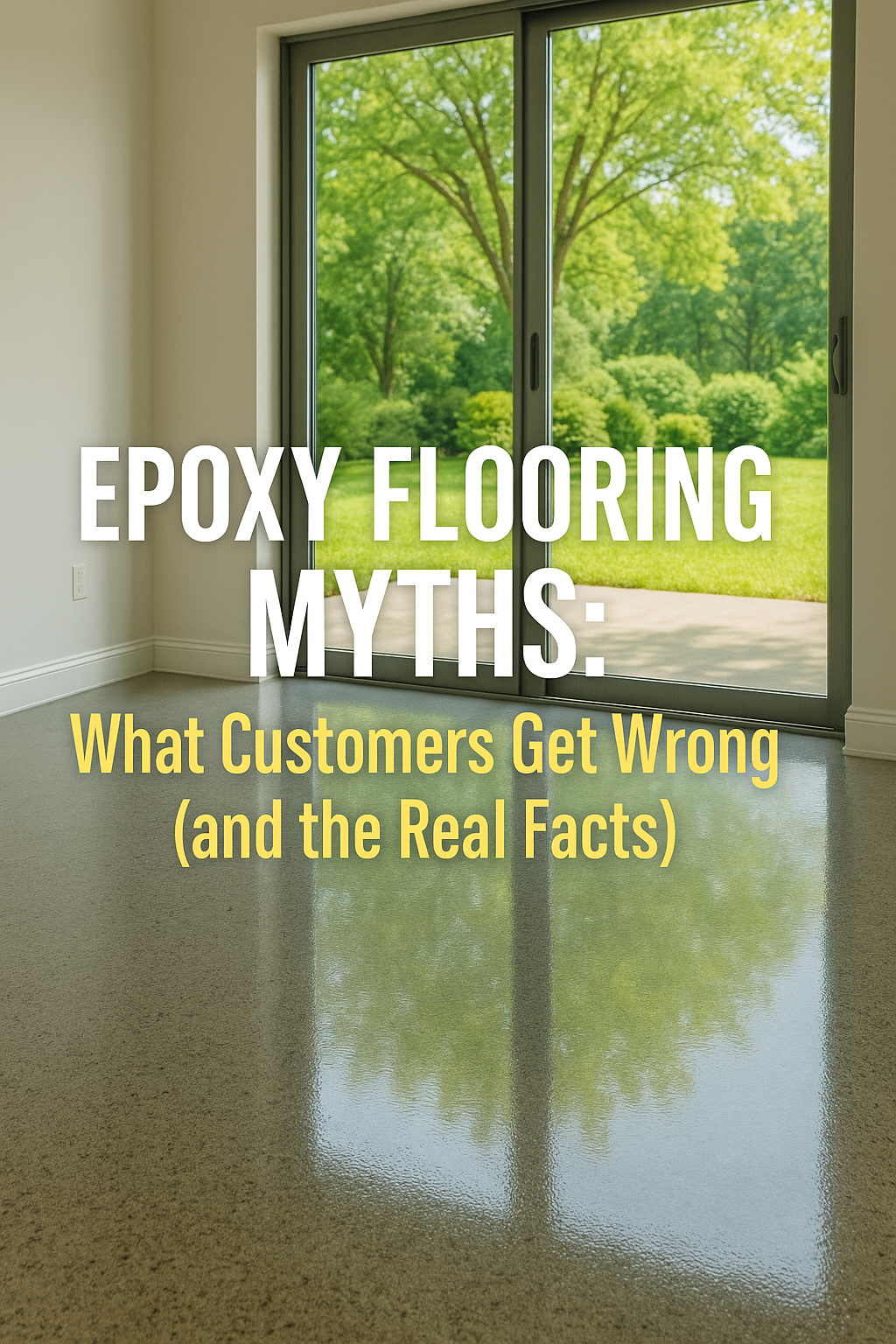
Epoxy flooring has exploded in popularity over the last decade. From garages and showrooms to warehouses and commercial kitchens, epoxy is often marketed as a “one-size-fits-all” miracle floor. But with that popularity comes misinformation.
At Concrete Protective Solutions, we spend a lot of time correcting myths about epoxy flooring so customers can make informed decisions that actually match their space, usage, and long-term expectations. Let’s break down the most common epoxy flooring myths — and the truth behind them.
Myth #1: Epoxy Flooring Is Indestructible
The Reality:
Epoxy is extremely durable — but it is not indestructible.
High-quality epoxy systems can withstand:
Heavy foot traffic
Forklifts and pallet jacks
Chemical spills
Abrasion and impact
However, epoxy can fail if:
The concrete was not properly prepped
Moisture vapor transmission is ignored
The wrong epoxy system is used for the environment
The coating is pushed far beyond its design limits
Epoxy is tough, but no coating survives poor installation or improper use.
Myth #2: Epoxy Floors Are Always Slippery
The Reality:
Epoxy floors only become slippery if they’re installed without traction additives in the wrong environment.
High-gloss epoxy can be slick when wet — but professional installers add:
Broadcast aggregate
Textured topcoats
Anti-slip additives
These create excellent traction, even in:
Commercial kitchens
Manufacturing facilities
Wet process areas
Slip resistance is a design choice, not a limitation of epoxy itself.
Myth #3: All Epoxy Floors Are the Same
The Reality:
There are many different epoxy systems, and they are NOT interchangeable.
Some common system types include:
Moisture-mitigating epoxy
High-build industrial epoxy
Decorative flake epoxy
Chemical-resistant novolac epoxy
UV-stable polyaspartic or polyurethane topcoats
Each system is engineered for specific conditions like:
Moisture vapor
Chemical exposure
Heavy impact
Thermal stress
Sunlight exposure
Choosing the wrong epoxy system is one of the biggest causes of early failure.
Myth #4: Epoxy Flooring Is Maintenance-Free
The Reality:
Epoxy flooring is low maintenance, not no maintenance.
Routine care includes:
Sweeping or dust mopping
Occasional neutral cleaner washing
Avoiding harsh degreasers and acids
Over time, industrial environments may require:
Topcoat refresh
Reapplication in high-wear lanes
The good news? Maintenance costs are still far lower than most tile, vinyl, or concrete replacement options.
Myth #5: Epoxy Is Always the Best Concrete Coating Option
The Reality:
Epoxy is excellent — but it is not always the best choice.
In certain environments, superior alternatives may include:
Urethane polymer cement (UPC) for thermal shock and extreme moisture
Polished concrete for low-maintenance, long-term durability
Polyaspartic systems for rapid return-to-service timelines
Epoxy works best where:
Moisture is controlled
Temperature swings are reasonable
UV exposure is minimal
Chemical resistance is important
Professional evaluation determines whether epoxy is the right tool for the job.
Myth #6: DIY Epoxy Kits Perform Like Professional Systems
The Reality:
Big-box store epoxy kits are not comparable to professional-grade coatings.
DIY kits typically fail because:
Little to no mechanical concrete grinding
No moisture testing
Thin film builds
Weak bonding strength
Poor abrasion resistance
Professional epoxy installation includes:
Diamond grinding or shot blasting
Crack and spall repair
Moisture mitigation systems (if required)
Multiple build coats
Industrial-grade materials
DIY epoxy may look decent for a short time — but it rarely survives real-world wear.
Myth #7: Epoxy Fails Because the Product Is Bad
The Reality:
Over 90% of epoxy failures happen because of surface preparation — not product quality.
Common prep failures include:
Insufficient grinding profile
Contaminants in the concrete
Active moisture vapor pressure
Oil-soaked substrates
Inadequate patching
Epoxy bonds mechanically — not just chemically. If the concrete isn’t properly prepared, the coating can’t grip the surface, regardless of how good the product is.
Myth #8: Epoxy Can Be Installed Anytime, Any Season
The Reality:
Temperature and humidity matter — a lot.
Most epoxy systems require:
Specific slab temperature ranges
Stable ambient air temperature
Controlled humidity levels
Installing epoxy in cold, wet, or high-humidity conditions without proper controls can result in:
Blushing
Soft curing
Delamination
Poor adhesion
Professional contractors plan installations around environmental conditions to guarantee performance.
Myth #9: Epoxy Flooring Is Only for Garages
The Reality:
Garages helped popularize epoxy — but today it’s widely used in:
Warehouses
Food processing facilities
Retail spaces
Breweries
Showrooms
Hospitals
Manufacturing plants
Distribution centers
Modern epoxy systems are engineered for industrial-grade performance, not just residential garages.
Myth #10: Epoxy Flooring Is Too Expensive
The Reality:
Epoxy is often less expensive over time than traditional flooring.
While the upfront cost is higher than paint or tile, epoxy offers:
Longer lifespan
Reduced maintenance
Fewer repairs
No grout lines
Improved safety and cleanliness
Reduced downtime after installation
When analyzed over 10–20 years, epoxy is often one of the most cost-effective flooring solutions available.
Why Professional Guidance Matters
Choosing the wrong coating system — or installing the right one incorrectly — can result in:
Premature failure
Safety hazards
Costly downtime
Moisture-related delamination
Expensive tear-out and replacement
At Concrete Protective Solutions, every epoxy project starts with:
Moisture testing
Surface evaluation
Site usage assessment
Chemical exposure review
Traffic load analysis
Only then do we design the correct system for long-term performance.
Final Thoughts
Epoxy flooring is an outstanding solution — when the right system is selected and professionally installed under the right conditions. The myths surrounding epoxy often lead to bad expectations, poor installations, and early failures.
Understanding the truth allows you to:
Avoid expensive mistakes
Choose the correct coating system
Maximize lifespan
Improve safety
Protect your concrete investment
If you’re considering epoxy — or have questions about whether it’s the right fit for your space — professional evaluation makes all the difference.
